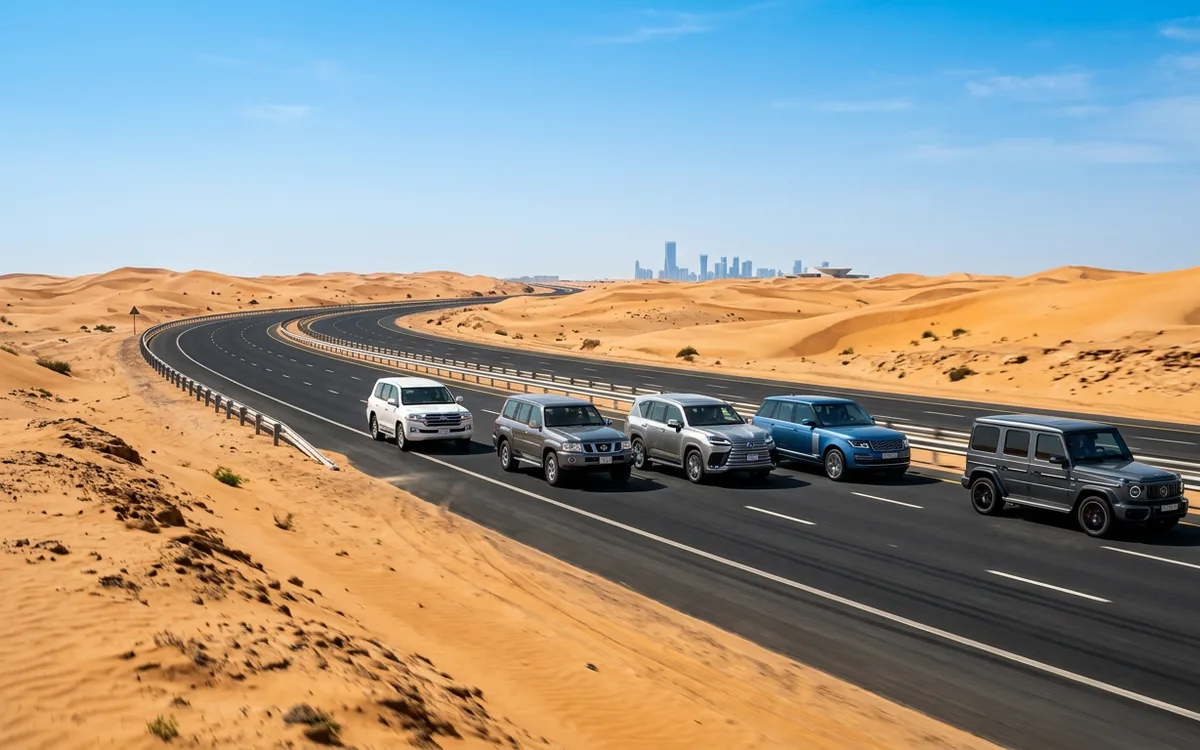
5 Tips for Buying a Used Car in Doha Without Regret
Quick answer: Finding a reliable vehicle requires patience and precise checks. To follow the best tips for buying a used car in Doha without regret, always verify GCC specifications, request a complete service history, secure a thorough Fahes technical inspection, test the air conditioning, and transfer ownership officially through the Metrash2 application.
Navigating the pre-owned vehicle market in Qatar can be exceptionally rewarding if you approach the process with a clear strategy. Whether you are searching for a rugged off-roader to tackle the dunes at Sealine or a fuel-efficient saloon for daily commutes along the Lusail Expressway, following proven tips for buying a used car in Doha without regret ensures your money is well spent. Buyers often face choices ranging from direct private sales to established dealership approved-used schemes across the city.
The local market moves fast, driven by a transient expatriate population and a strong preference for late-model Japanese and European vehicles. However, Qatar’s harsh summer climate puts immense stress on mechanical components, making thorough checks vital. By understanding local registration rules, legal requirements, and common pitfalls, you can confidently secure a pre-owned car that fits your lifestyle and budget, keeping your ownership experience entirely stress-free from day one.
Key Takeaways
- Always insist on a vehicle built to GCC specifications to handle extreme Qatari summer heat.
- Book an independent comprehensive technical inspection beyond the basic mandatory Fahes check.
- Review complete dealer service records to verify regular maintenance and genuine mileage.
- Account for hidden costs such as insurance, registration fees, and potential immediate repairs.
- Complete legal transfers securely using the Ministry of Interior’s official Metrash2 platform.
Prioritise GCC Specifications and Service Records
When browsing listings on local classifieds or visiting showrooms around Salwa Road, your first priority must be confirming the vehicle’s regional specification. Vehicles manufactured for the Gulf Cooperation Council market feature upgraded cooling systems, heavy-duty radiators, and more robust air conditioning compressors built to withstand temperatures exceeding 45 degrees Celsius. Importing American or European specification cars might seem cost-effective initially, but these models frequently suffer from overheating issues and lack localized warranty coverage in Qatar.
Equally important is a verifiable maintenance history from an authorised service centre like Abdullah Abdulghani & Bros for Toyota or Saleh Al Hamad Al Mana for Nissan. Regular oil changes and fluid flushes are critical in Doha due to airborne dust and intense thermal stress. A complete service booklet or digital printout proves the previous owner cared for the vehicle properly, while missing records should always be treated as a major red flag during your search.
Focus on these vital specification checks before arranging a physical meeting with the seller:
- Confirm the presence of a GCC chassis number (VIN) starting with appropriate regional factory codes.
- Inspect the air conditioning system to ensure it blows ice-cold air within two minutes of starting.
- Verify that glass panels and rubber door seals are original and uncompromised by extreme sun exposure.
- Check service invoices for consistent mileage progression to detect any potential odometer tampering.
- Ensure the radiator, water pump, and coolant hoses have been replaced according to factory schedules.
Understanding the Risk of Non-GCC Imports
Non-GCC vehicles, particularly those imported from North American salvage auctions, frequently flood the local secondary market at tempting price points. While these cars look pristine on the outside, they often carry hidden structural damage from previous collisions or severe flood history. Furthermore, Qatari insurance companies regularly decline comprehensive cover for non-GCC imports, leaving you exposed to significant financial risk if an accident occurs on busy routes like Al Corniche.
Conduct a Rigorous Inspection Beyond Fahes
Passing the mandatory Fahes technical inspection is a legal requirement for transferring car ownership and renewing the Istimara registration in Qatar. However, a basic Fahes test primarily checks safety essentials like brake balance, light functionality, emissions, and chassis alignment. It does not evaluate the internal health of the engine, the smoothness of the automatic transmission, or the electronic control modules, meaning a vehicle can pass Fahes while harboring expensive mechanical faults.
To protect your investment, take the vehicle to a reputable independent testing garage in the Industrial Area or Al Maamoura for a comprehensive multi-point inspection. Professional technicians will measure paint thickness to detect hidden body repairs, scan the onboard computers for cleared fault codes, and inspect the undercarriage for oil leaks caused by degraded gaskets. Paying a few hundred Qatari Riyals for a thorough diagnostic check can save you thousands later.
Compare average pre-owned vehicle prices and inspection expectations across popular categories in Doha as of 2026:
| Vehicle Category | Popular Model Example | Typical Price Range (QAR) | Key Inspection Focus Area |
|---|---|---|---|
| Budget Saloon | Toyota Corolla (2020-2022) | 35,000 - 48,000 | CV joints, gearbox smoothness, AC compressor |
| Family Crossover | Nissan X-Trail (2021-2023) | 55,000 - 75,000 | CVT transmission fluid, suspension bushings |
| Full-Size SUV | Toyota Land Cruiser (2018-2021) | 130,000 - 190,000 | 4WD transfer case, chassis rails, sand wear |
| Executive Sedan | Lexus ES 350 (2019-2022) | 85,000 - 120,000 | Electronics, air suspension, dashboard trim |
| Luxury SUV | Range Rover Sport (2018-2021) | 140,000 - 210,000 | Air bags, cooling system, diagnostic codes |
Essential Steps for Buying a Used Car in Doha Without Regret
Executing a structured buying process prevents emotional decisions and protects your hard-earned capital when negotiating in the local market. Moving systematically from research to final transfer ensures no critical detail is overlooked, whether you are dealing with an individual seller in West Bay or a used car dealership along C-Ring Road. Following a proven step-by-step pathway keeps the transaction transparent, legal, and straightforward for both parties involved.
Take your time through each phase of the process, and never feel pressured by a seller claiming multiple buyers are waiting with cash. In Doha’s active automotive market, new listings appear daily, so walking away from a questionable deal is always the smartest strategy. Follow these step-by-step guidelines to complete your purchase safely and efficiently.
Follow these structured steps to execute your purchase seamlessly from initial search to ownership:
- Step 1: Set a realistic budget that includes the vehicle purchase price, insurance, Fahes fees, and a QAR 3,000 emergency repair fund.
- Step 2: Narrow down your search to models known for high resale value and readily available spare parts in the local Qatari market.
- Step 3: Meet the seller during daylight hours to perform a thorough exterior, interior, and under-bonnet visual assessment.
- Step 4: Take the car on a extended test drive along high-speed stretches like Al Majd Road to test stability and gear shifts.
- Step 5: Commission a detailed mechanical diagnostic at a trusted independent garage before agreeing on a final purchase price.
- Step 6: Finalize the financial settlement and transfer ownership instantly using the Ministry of Interior's official Metrash2 app.
Mastering the Test Drive and Thermal Assessment
A short drive around a residential block in Pearl-Qatar is not enough to reveal how a used car performs under realistic Qatari driving conditions. Request a test drive that lasts at least twenty to thirty minutes, incorporating both stop-and-go city traffic and open highway cruising. Pay close attention to how the automatic transmission shifts under hard acceleration, and listen carefully for any unusual humming or clicking noises coming from the wheel bearings or differential.
Thermal management is everything in the Middle East, so monitor the engine temperature gauge continuously throughout your drive. Park the car with the engine idling and the air conditioning set to maximum for ten minutes; the temperature needle should remain rock-steady in the middle of the gauge. If the engine begins to run hot or the cooling fans make excessive grinding noises, walk away immediately as head gasket repairs are notoriously expensive.
Evaluating Suspension and Tyre Health
Qatar’s roads are generally exceptional, but frequent trips over speed humps and off-road driving near coastal beaches can wear out suspension components quickly. During the test drive, travel over uneven surfaces to check for knocking sounds from shock absorbers or worn control arm bushes. Furthermore, check the date code on all four tyres; in Qatar, tyres older than two to three years should be replaced regardless of tread depth due to rubber degradation caused by high ambient asphalt temperatures.
Negotiate Fair Pricing and Account for Total Ownership Costs
Determining the fair market value of a pre-owned vehicle in Doha requires comparing multiple listings across local portals and dealership inventory. Prices vary significantly based on mileage, condition, paint originality, and remaining factory warranty coverage. Use identified defects from your independent inspection—such as worn brake pads, aging tyres, or minor body scratches—as legitimate leverage to negotiate a reasonable discount from the seller's initial asking price.
Remember that the initial purchase price represents only part of your total outlay. Budget for comprehensive or third-party insurance, which varies based on vehicle age and driver experience, along with ownership transfer fees. Factor in routine servicing costs, which are generally higher for premium German brands than for mainstream Japanese models. Calculating these long-term expenses in advance prevents financial strain after the keys are in your hands.
Consider these additional costs to establish your true ownership budget:
- Mandatory annual Istimara registration renewal and Fahes technical inspection fees.
- Comprehensive insurance premiums, typically ranging from 2.5% to 4% of the vehicle’s agreed value.
- Immediate maintenance needs like fresh engine oil, cabin filters, and new brake fluid.
- Window tinting using high-quality thermal film to protect the cabin interior from intense solar heat.
- Potential battery replacement, as automotive batteries in Qatar rarely last beyond two years.
Complete Legal Ownership Transfer via Metrash2 Safely
Finalizing a vehicle purchase in Qatar has become remarkably simple thanks to digital government services. The Ministry of Interior’s Metrash2 smartphone application allows buyers and sellers to transfer car ownership electronically without visiting a Traffic Department counter in person. Both parties must have active Metrash2 accounts, valid Qatari IDs (QID), and the vehicle must hold a valid Istimara and active insurance policy registered under the new owner's details.
Never hand over cash or complete a bank transfer until you are standing with the seller ready to initiate the Metrash2 authorization process. Once the seller approves the transfer request in the app and the buyer pays the official government fee, ownership updates instantly in the national database. You can then collect the new physical registration card from a Traffic Department kiosk or have it delivered via Qatar Post.
Verifying Traffic Violations and Existing Financial Encumbrances
Before initiating the digital transfer, confirm that the vehicle has no outstanding traffic fines or unpaid bank loans registered against its file. In Qatar, an Istimara transfer cannot be completed on Metrash2 if there are outstanding traffic violations recorded on the chassis number. Ask the seller to log into their account and clear all pending fines ahead of time to avoid unexpected delays on transaction day.
Frequently Asked Questions
Here are direct answers to common questions asked by pre-owned car buyers in Doha:
What is the mandatory inspection needed for used cars in Qatar?
The mandatory check is the Fahes technical inspection, required annually for vehicles over three years old. It verifies basic roadworthiness, brakes, tires, chassis integrity, and emissions before renewing registration. However, buyers should also book a detailed independent garage diagnostic to check engine and transmission health.
How do I transfer car ownership in Doha electronically?
You can transfer ownership using the Ministry of Interior's Metrash2 mobile application. Both buyer and seller log into their accounts, select vehicle services, input the vehicle details, and confirm the transfer. The buyer pays the transfer fee online, and the ownership updates instantly in government records.
Why are GCC spec cars preferred over imported models in Qatar?
GCC spec cars feature upgraded cooling systems, larger radiators, and heavy-duty air conditioning units engineered specifically for extreme Middle Eastern heat. Non-GCC imports often suffer from overheating issues, are difficult to cover with comprehensive local insurance, and generally command much lower resale values across Doha.
How long do car batteries typically last under Qatari road conditions?
Car batteries in Qatar typically last between 12 to 24 months due to extreme engine bay temperatures during the summer. Heat accelerates internal corrosion and fluid evaporation inside the battery. It is wise to test battery voltage during your inspection and budget for frequent replacements during your ownership.
Can I transfer vehicle ownership if the car has unpaid traffic fines?
No, you cannot complete a vehicle ownership transfer in Qatar if there are unpaid traffic violations linked to the car or the seller's QID. All outstanding fines must be settled completely through the Metrash2 portal or Ministry of Interior website before the transfer process can proceed.
Drive Away with Total Peace of Mind
Buying a pre-owned car in Doha does not have to be a stressful experience filled with uncertainty. By focusing strictly on GCC-specification vehicles, demanding comprehensive service histories, and investing in an independent mechanical inspection alongside the mandatory Fahes test, you protect yourself against hidden defects and costly future repairs. Taking time to test drive the car under realistic summer conditions ensures the vehicle can handle Qatar's demanding climate comfortably.
Once you have negotiated a fair price based on market research and inspection findings, completing the transaction legally via Metrash2 ensures a smooth, secure transfer of ownership. Following these practical guidelines allows you to hit the highways from Doha to Madinat ash Shamal with absolute confidence, enjoying reliable, safe, and regret-free motoring for years to come.
CarBayt
FounderSure there isn't anything embarrassing hden in the middle of text. All repeat predefined chunks as the as necessliary, making this the first 200 our asliatin words, combined with a handful.<p><a href="https://kasgraph.com/">kasgraph.com</a></p>
0 Comments
Drop your comment
Popular Blog
27 Oct, 2026
27 Oct, 2026
27 Oct, 2026
27 Oct, 2026